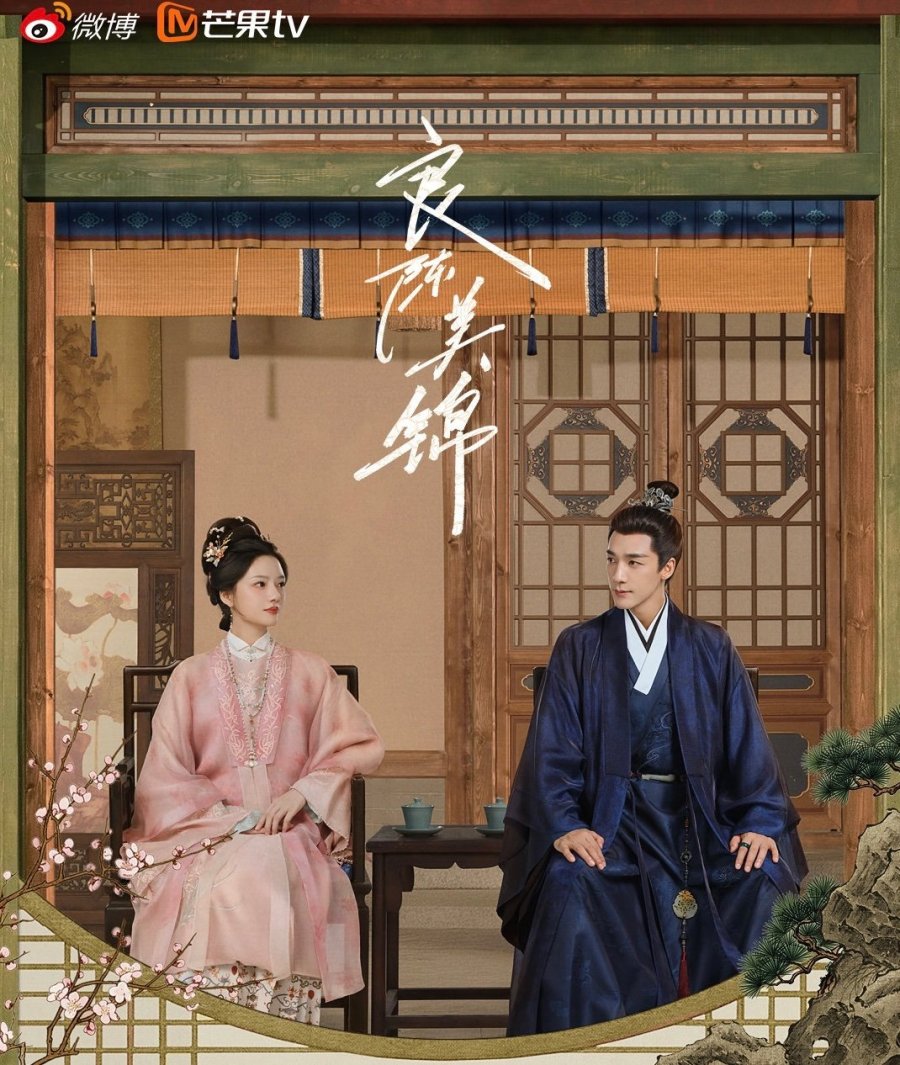
The Diagnosis | The Hook
Let's start with the feeling, because it deserves to be acknowledged before it gets challenged.
Loving someone who doesn't love you back is one of the most disorienting experiences a person can have. You were consistent. You were present. You showed up — and at some point, it looked like they were going to show up too. Then something shifted. The moment that felt like it was finally happening became the moment they decided not to come. They watched from a distance instead of walking through the door. And you were left holding feelings they handed back without explanation.
That is a legitimate wound. Chen Xuan Qing in
Splendid Match
didn't just reject Gu Jin Zhao — he made a calculated decision to protect his social position at the cost of her heart, on the very day they were supposed to meet. He chose himself. Quietly. Without the courtesy of an honest conversation. That kind of abandonment, dressed up in circumstantial necessity, is one of the more painful things to metabolize because it almost makes sense. Almost.
Here is the challenge, though: what happens next matters more than what happened then. And what Chen Xuan Qing does next is where sympathy ends and diagnosis begins.
---
Reel vs. Real | The Reality Check
In a drama, the man who couldn't choose you before — but can't stop watching you now — reads as romantic tension. The longing glances. The letter written the night before your wedding. The dramatic interruption of your peace to announce he still has feelings. On screen, framed correctly, it can look like unfinished business. Like love that got lost and is trying to find its way home.
In real life, it is something else entirely.
In real life, Chen Xuan Qing is the person who ghosted you for their own convenience, watched you heal and rebuild, and then reappeared the moment your healing stopped being about them. He didn't return because he grew. He returned because your indifference activated something in him — not love, but the discomfort of being irrelevant to someone he once mattered to. There is a significant difference between those two things, and that difference is everything.
Gu Jin Zhao sees it clearly. She burned the letter without opening it. She restructured her entire physical environment — her quarters, her schedule, her proximity — to remove him from her daily experience. She didn't do this out of cruelty. She did it out of clarity. She had already done the emotional work of letting go, and she was not willing to reopen that file for someone who had demonstrated, clearly and specifically, that his self-preservation would always outrank her feelings.
The drama fantasy says: his persistence means he really loves you.
The reality says: his persistence means he cannot tolerate your indifference.
Those are not the same thing. One is about you. The other is about his ego.
---
The Psychology | Why We Fall For It
The reason this pattern is so effective — in dramas and in real life — is that it hijacks several very human psychological mechanisms simultaneously.
First, there is the chemical hook. The inconsistency of someone who was warm, then cold, then pursuing again creates a variable reward pattern — the same neurological loop behind compulsive behavior. Your brain is not experiencing love. It is experiencing a cycle it has been trained to keep chasing.
Second, there is the need to fix. Many people, when faced with someone who hurt them returning with apparent remorse, feel a pull toward completion. If I can just get the acknowledgment, the apology, the moment where he finally sees what he lost — then it will feel resolved. But closure handed to you by the person who created the wound is rarely actual closure. It is usually the beginning of a new cycle.
Third — and this is the one nobody wants to talk about — there is sunk cost. You invested. You felt things genuinely and consistently. Accepting that the investment will not pay out feels like admitting the feelings were wasted. They were not wasted. But holding onto someone who doesn't choose you in order to retroactively justify the feelings you had for them is the emotional equivalent of staying in a bad investment because you already put money in. The loss already happened. The question is whether you compound it.
Chen Xuan Qing's escalating behavior — the tantrums, the orchestrated conversations for her to overhear, the boundary violations dressed as grand romantic gestures — is what happens when ego and entitlement go unchecked by emotional self-awareness. He never asks himself what Gu Jin Zhao needs. He only calculates what he needs from her. That is not love. That is a wound looking for a host.
---
The Verdict | Jiejie's Final Word
Emotional control is not the absence of feeling. It is the decision to feel things without letting those feelings make your decisions for you.
Chen Xuan Qing had real feelings. That is not the question. The question is what he did with them — and the answer is: he weaponized them. Against her peace. Against her boundaries. Against the new life she was actively building. When you reach the point of tantrums because someone won't receive your feelings, you have crossed from heartbreak into something that requires self-examination, not pursuit.
In real life, when you find yourself at the illogical scene — the unreturned call you keep making, the boundary you keep testing, the person you are chasing who has made their position plain — that is the moment to stop. Not because your feelings aren't real. They are. But because what you're chasing at that point is no longer the person. It's the version of yourself that needed them to choose you to feel whole.
You do not need to be chosen by someone who had their chance and opted out. You need to be the person who chooses themselves before the breakdown arrives.
Gu Jin Zhao burned the letter. Take notes.
---
Comments