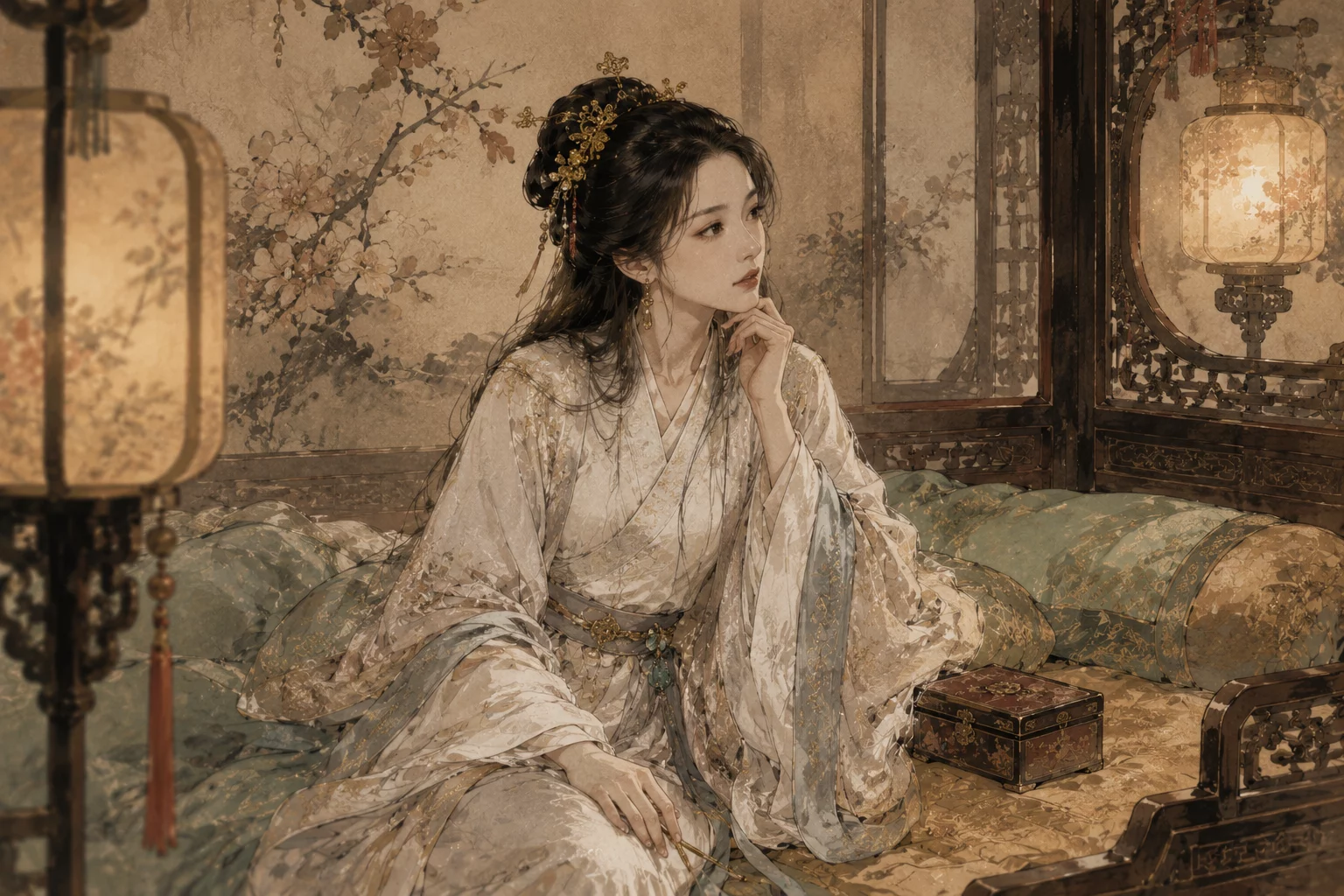
The Stage | Drama & Period Context
The Royal Subject:
In historical K-dramas, the King's concubines, or Naegwan (內官), are often portrayed as elegant political players. However, some of the most compelling narratives focus on the Outcast Concubine—the woman who, through fate or ambition, gains the King's attention but is rejected by the entire court, forced to live as a pariah within the palace walls. This dynamic explores the brutal intersection of hierarchy, politics, and feminine power in the Joseon Dynasty.
The Historical Record | What Actually Happened
Historical Context:
Historical Context: The Politics of Rank
The Joseon court was governed by strict Confucian laws. While the King could have only one Queen Consort, he was permitted multiple concubines to ensure the royal lineage continued. The social status of a concubine depended entirely on how she entered the palace, which dictated how the court—including her own children—treated her.
- Selected Concubines (Gantaek Hugung): These women were formally chosen from aristocratic (Yangban) families, usually when the Queen failed to bear a son. They held higher respect and status, entering at Junior 2nd rank or higher.
- Favored Concubines (Seungeun Hugung): These women were typically former court maids (Gungnyeo), slaves, or professional entertainers (gisaeng) who were elevated after catching the King's eye. Their low birth meant their elevation was seen as a grave threat to the social order by the noble clans, making them natural outcasts.
Drama Portrayal: The Colors of Shame
The distinction was visible in everything, especially costume. While the Queen wore red or phoenix-emblazoned ceremonial robes (Hongwonsam), concubines wore robes specific to their rank.
- Color and Fabric: Lower-ranking concubines from humble backgrounds would wear simpler, less adorned fabrics, and their ceremonial robes (Wonsam) might be violet or green. A drama often emphasizes a concubine's pariah status by showing her wearing slightly duller or simpler clothes, making her look permanently lower-class compared to the Queen, even if her actual rank (Bin or Gwi-in) was high.
- Discrimination of Children: The children of low-born concubines (Seoeol) were often subjected to severe discrimination, restricted in their education and denied access to high officialdom. This lack of inherited status cemented the mother's failure to truly integrate into the royal structure, regardless of the King's affection.
The Drama's Interpretation | Fact vs. Fiction
Drama Portrayal:
Drama Title & Scene Description: The Red Sleeve (2021)
The K-drama The Red Sleeve offers a profound and tragic examination of the Pariah in the Palace dynamic through the real-life figure of Royal Noble Consort Uibin Seong (Seong Deok-im). Seong Deok-im was an ordinary court maid who repeatedly refused the love of King Jeongjo (Yi San) for years, knowing that becoming a concubine meant losing her freedom and agency, and subjecting herself to the ruthless politics of the court, particularly because she lacked a powerful family lineage. She eventually accepts the role, but not out of ambition—it is out of devotion to the King.
The "So What?":
The tragedy of Seong Deok-im's story lies not in her lack of love, but in the irreconcilable political reality of her rank. Her ultimate power—the King's affection—was the very thing that made her a target for the Queen, the Dowagers, and all the noble clans. Her low birth and resistance to royal life meant she was never viewed as a legitimate wife or political asset, only as a selfish interloper who had to be contained. The drama successfully uses this pariah status to show that even the King's most genuine love could not override the unyielding, cruel hierarchy of Joseon's court. Moreover, regardless of whether she wore a Queen's colors or a maid's apron, the core reality of palace life remained: every woman, even the Queen, functioned as the King's political and reproductive servant. The title only changed the flavor of the servitude, not the essence.
The Power Dynamics | Who Holds What
Key Analysis & Conclusion:
The "Pariah in the Palace" archetype highlights the structural misogyny of the Joseon court, where a woman's value was not in her character or her love, but strictly in her birth rank and her ability to serve the lineage. While the Queen held the title, the Outcast Concubine held the spotlight, demonstrating that true power often came at the cost of personal peace, freedom, and even life.
Do you think the tragic fate of the outcast concubine is an inevitable result of the Joseon hierarchy, or is it a dramatic device K-dramas use to manufacture conflict? Share your thoughts below!
This video on the royal court attire of the Joseon era can offer a visual context for the rank differences discussed in the article: THE JOSEON FASHION SHOW – CEREMONIAL ROBES – WONSAM AND NOEUI.