The Thesis | What We're Arguing
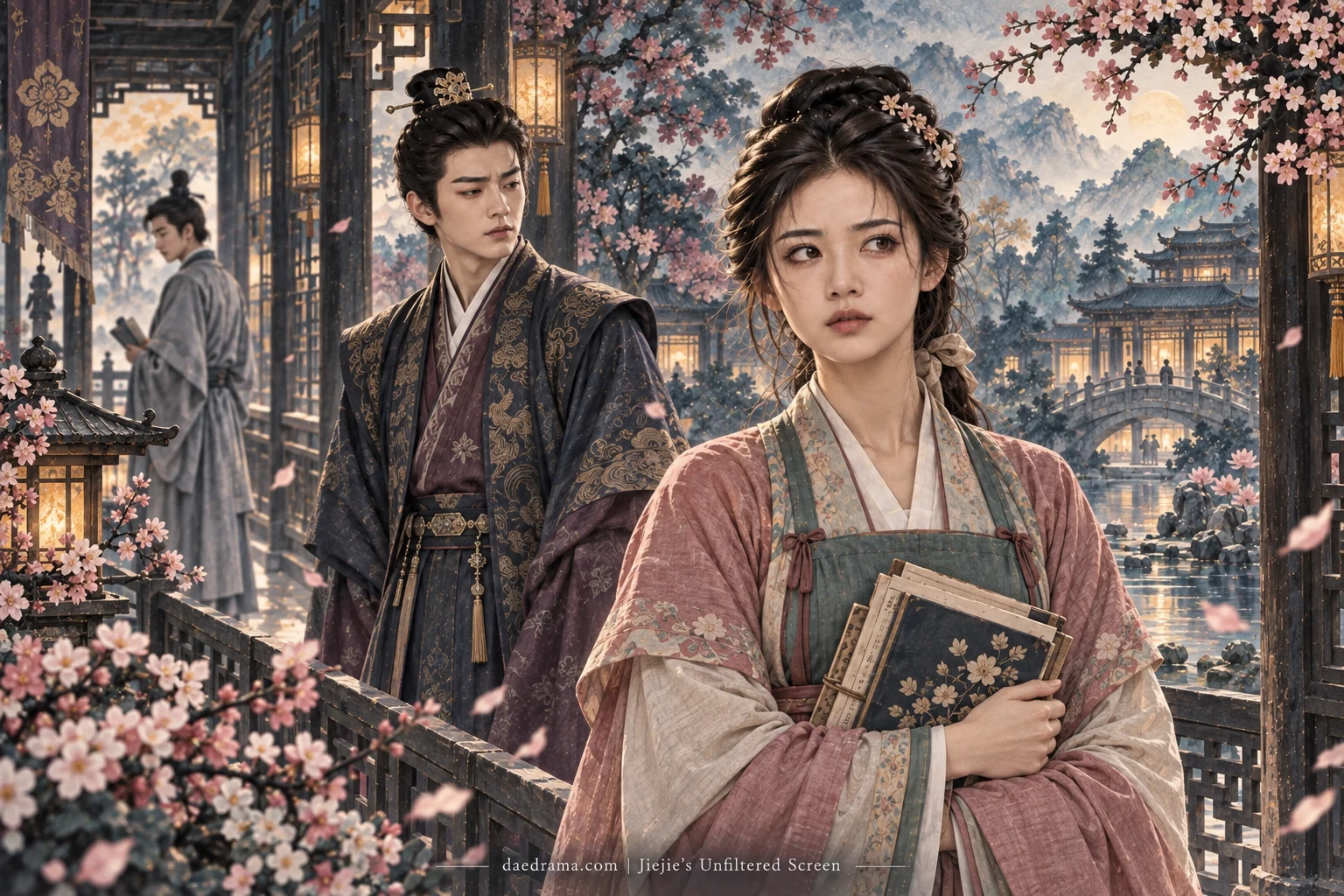
In the historical fantasy drama Moon River, the antagonist Elder Wolha transcends the boundaries of standard political corruption; by illicitly copying names from the sacred 'Registry of the Chosen by Samsin,' his character operates as a malignant mythological force whose ultimate crime is the systematic perversion of the Joseon cosmic order, shifting the drama's stakes from a routine struggle for the throne to an existential war over destiny itself.
The Context | Why This Matters
During the Joseon era, marriage was treated as an unassailable cosmic alignment rather than a personal romance, heavily dictated by gung-hap (marital harmony) and calculated via Saju—the 'Four Pillars of Destiny' representing the exact year, month, day, and hour of birth. This immutable blueprint governed an individual's elemental balance under Yin/Yang and the Five Elements, making professional matchmakers (Jungmae Pae) vital social and spiritual brokers who guarded heaven's will. Defying an inauspicious reading was culturally viewed as inviting ancestral ruin, which frames the gravity of a mortal attempting to manipulate these divine unions.
The Evidence | First Point
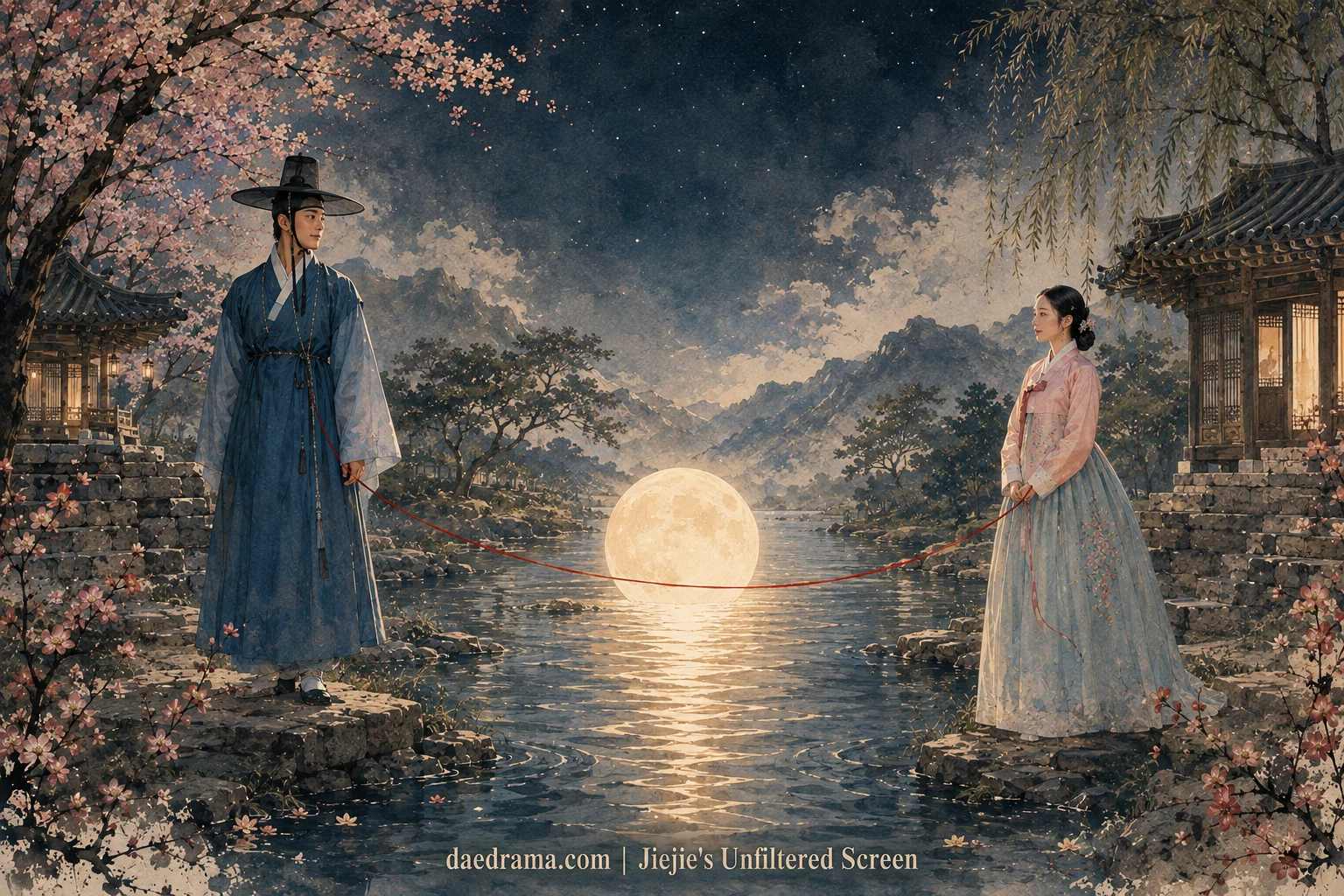
The pilot episode establishes Elder Wolha not merely as a corrupt minister, but as a cosmic heretic through his clandestine subversion of traditional matchmaking roles. When he surreptitiously copies names from Samsin's celestial register, he is actively seizing the database of in-yeon (the fated red thread of connection) from the goddess of childbirth and fate. Instead of neutrally interpreting the stars to preserve social equilibrium, Wolha weaponizes this divine data to force incompatible, politically advantageous matches that explicitly serve his own faction, deliberately fracturing the pre-ordained spiritual ties designed by the gods.
The Evidence | Second Point
The production employs a brilliant stroke of narrative economy by turning the abstract, spiritual concept of fate into a physical ledger, creating a tangible MacGuffin that externalizes a supernatural conflict. Historically, no human could touch or alter the invisible forces of Saju, but by materializing destiny into a stolen notebook, the writers render the cosmic framework vulnerable to human interference. This artistic license effectively grants a human antagonist god-level leverage, shifting the primary narrative tension from a standard courtroom coup to an intense battle over who controls the literal 'source code' of the universe's future.
The Evidence | Third Point
The deepest thematic realization of this conflict occurs in how Wolha’s spiritual desecration directly justifies the narrative's central supernatural disruption: the body-swap between Prince Yi Gang and the commoner Park Dal I. Far from being a whimsical, comedic plot device, this drastic soul-exchange functions as a desperate, proportional countermeasure deployed by the goddess Samsin. By physically tangling her chosen pair in the most intimate manner possible, she effectively shields them from Wolha's artificial pairings while simultaneously positioning the Prince as her direct divine instrument to infiltrate the mortal bureaucracy and reclaim her stolen ledger.
The Counter | Steelman the Other Side
A reasonable counter-argument might suggest that viewing Elder Wolha purely as a cosmic entity overemphasizes the fantasy elements of what remains fundamentally a political palace thriller. One could argue that the stolen ledger is simply an elaborate metaphor for administrative corruption—such as forging census records or falsifying lineage papers—which were common tactics utilized by real Joseon factions to consolidate power. However, while the structural execution mimics historical political manipulation, the explicit inclusion of the goddess Samsin's direct magical retaliation confirms that the narrative intentionally treats Wolha's secular ambition as a literal, high-stakes violation of the spiritual realm.
The Verdict | So What
Ultimately, decoding Elder Wolha's actions reveals how Moon River elevates standard sageuk conventions by weaving complex historical folklore seamlessly into its narrative architecture. By translating the abstract sanctity of Saju and in-yeon into an active battleground, the drama challenges the viewer to look beyond surface-level palace intrigue. It demonstrates that the most terrifying villains are not those who merely seek to conquer the physical throne, but those who possess the terrifying ambition to rewrite the spiritual laws governing human legacy, identity, and love.